Rethinking homes for social rent: Low-carbon and affordable design
Topic: Buildings and energy
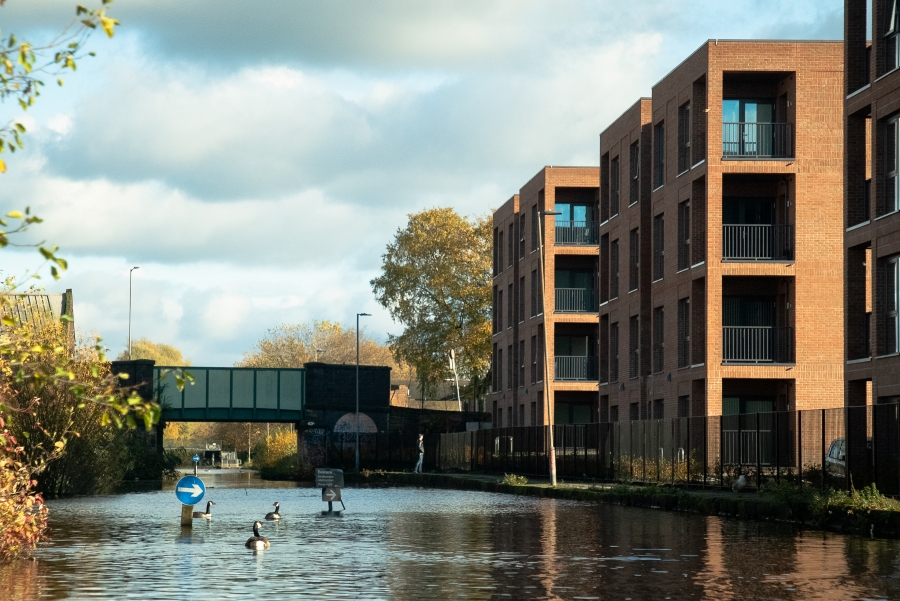
Image: MCAU
Silk Street has 69 new low-carbon homes. All for social rent and designed to improve the health and wellbeing of residents. They're energy efficient, perform well in cold and warm weather and make the most of natural light. They're adaptable, have outside space and connect to the natural environment. And they bring a long-term brownfield site in North Manchester back into use.
Energy used to heat, light and power buildings creates most of the city's carbon (CO2) emissions. Our new affordable homes at Silk Street use sustainable tech. To both reduce emissions and lower energy bills for residents. Helping to reduce fuel poverty and boost resilience to fossil fuel price changes.
Place-based zero-carbon projects like this are key to growing a local low-carbon economy. And developing best practice building design for the highest standards of carbon performance. They're also key to creating sustainable and connected communities. With access to nature and amenities to support them to live well.
Housing design fit for a sustainable future
The 48 apartments and 21 houses are built to enhanced environmental specs. They all use ground source heat pumps and mechanical ventilation with heat recovery. This helps to keep utility costs down for their residents. The houses have solar panels, gardens, drives and electric vehicle (EV) charge points. The apartments have balconies, shared gardens, living green walls and green roofs.
To keep the construction carbon footprint low, the apartment blocks have lightweight steel frames. The houses are a timber frame and panel system that uses wood from sustainable sources.
HAPPI principles inform the design of the apartments. They aim to provide an attractive alternative to the family home. One that can adapt as people age and their needs change. The apartments have a larger internal space as standard – making adaptation easier. They're also M4(3) compliant and can adapt for wheelchair use.
One block of apartments was set aside for people over the age of 55. And the new residents have found many benefits to moving to these new homes. Christine lives at Silk Street and said:
“The flat’s lovely and warm and the bills are great. I was paying £160 a month in my old house. And I’m now paying around £58. And this will come down even more in the summer because I won’t need the heating on.
“I'm very content here. I sleep better. I love the views. And I can’t wait to see how they change when the summer comes. “I used to rely on my kids to take me shopping. But now, with so many shops on my doorstep, I can do my own. I’m getting out most days and feeling more independent.”
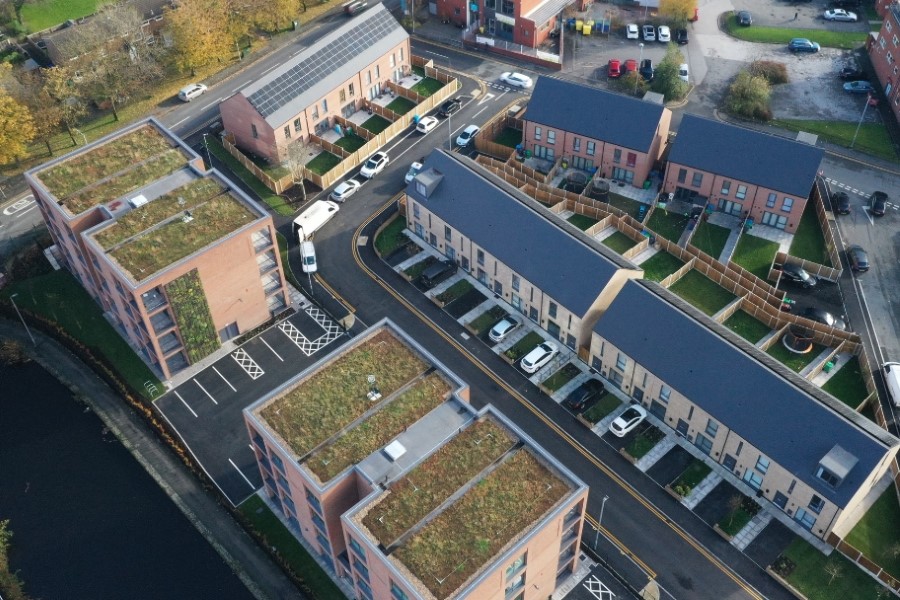
Image credit: MCAU
Co-benefits of building low-carbon housing
The co-benefits of building low-carbon housing are powerful motivators. They reach far beyond reducing the city’s carbon emissions. As they bring vital benefits for the health and wellbeing of the people that live in them.
These co-benefits include:
- lower energy bills
- less fuel poverty
- resilience to fossil fuel price changes
- homes that perform better in cold spells and heat waves
It doesn’t end there. Silk Street is a real opportunity to support regeneration in the area. This long-term brownfield site is now a welcoming residential area. It's layout and design encourages people to walk through it and around it. This helps to connect the surrounding area and the local high street. The Rochdale Canal, on one side of the site, provides a connection to local heritage. As well as the natural environment.
The project led conversations on housing quality. On what homes for social rent can and should look like. And they widened ideas about what was possible. Those conversations have grown the local low-carbon economy. From design and manufacture to the fitting of low-carbon tech. And created local employment, including 12 apprenticeships.
Silk Street rethought what was possible in place-based, low-carbon and affordable housing design. And helped to ensure we’re using best practice in our projects. These learnings have informed building design on other projects. And continue to influence new low-carbon building in the region.
More info
Find more on our work to create a liveable, biodiverse and resilient city. It’s our aim to be a zero-carbon city by 2038.
Find out more about how we're using green walls.
Find out more about the plans for Newton Heath and other regeneration projects in the city.